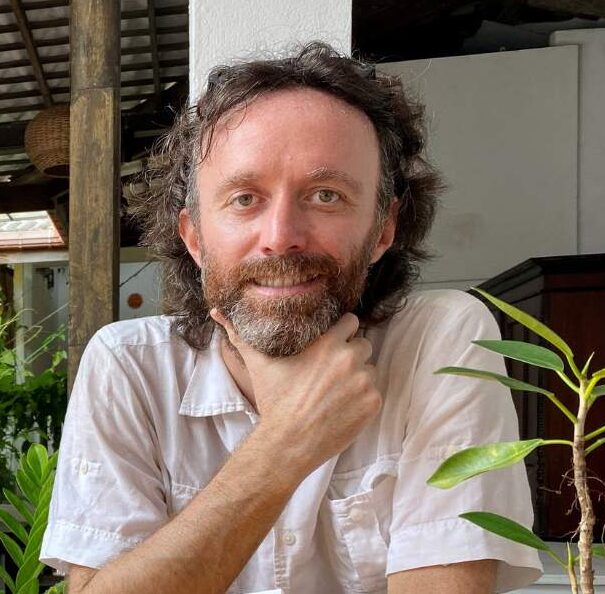
Dr Yuri Artioli
Marine Ecosystem Modeller
"Modelling for me offers a unique ability to study all the complex interactions that shape marine ecosystems and to understand how they react to all disturbances created by climate change, acidification and human activities. As such, it gives me the opportunity to inform and support the creation of new policies and management strategies aimed at a sustainable development of society. "
After a degree in Environmental engineering at the University of Padua (Italy), Yuri moved the focus of his research on modelling eutrophication in coastal area during his PhD, always at University of Padua. Since he moved to PML in 2008, Yuri has been developing and applying various models to study the impact of global stressors (like climate change, ocean acidification) as well as direct anthropogenic activities (like nutrient pollution, fishery and aquaculture) on marine ecosystems and the interaction among these drivers. He also studies how marine ecosystem could play a role in supporting society to address global challenges like climate changes, food provision and health. His interest spans from more purely scientific questions (like the importance of natural variability on determining the resilience of the marine systems) to translating that research in application to support policy makers, regulators, industry and the wider society in their effort to achieve global environmental goals like the Paris agreement on climate, the SDGs and the Colombo declaration.
Yuri is currently PI and co-I in several UK and EU funded projects.
Since November 2025 he is co-chair of the National Partnership for Ocean Prediction.
Key Projects
- GOA-ON North East Atlantic HUB – https://pml.ac.uk/projects/north-east-atlantic-hub-of-the-global-ocean-acidif/
- New Copernicus Capability for Trophic Ocean Network (NECCTON) – https://neccton.eu/
- Mission Atlantic – https://pml.ac.uk/projects/mission-atlantic/
- South Asian Nitrogen Hub (SANH) – https://pml.ac.uk/projects/sanh/
Selected Publications
- Nunes, L.T., Matos, T.D.S., Reis, C., Artioli, Y., Chust, G., Claudio, A., Coutinho, R., Ferreira, C.E.L., Mariani, P., Fernandes, L., 2026. Climate change reduces pelagic biomass in a coastal upwelling ecosystem. Commun Earth Environ. https://doi.org/10.1038/s43247-026-03395-1
- Holt, J., Katavouta, A., Hopkins, J., Amoudry, L.O., Appendini, C.M., Arneborg, L., Arnold, A., Artioli, Y., Aucan, J., Berx, B., Cagigal, L., Dominicis, M.D., Denamiel, C., Galli, G., Graham, J.A., Jacobs, Z., Jevrejeva, S., Kamranzad, B., Langlais, C., Larsen, M.A.D., Lira-Loarca, A., Lyddon, C., Mathis, M., Melet, A., Méndez, F., Muis, S., Myers, P., O’Donovan, M., Olbert, A.I., Palmer, M.D., Phillips, L., Polton, J., Buil, M.P., Robins, P., Ruju, A., Schlaefer, J.A., Senatore, A., Siedlecki, S., Tinker, J., Verri, G., Vilibić, I., Wei, X., Pinardi, N., 2025. Future climate projections in the global coastal ocean. Progress in Oceanography 103497. https://doi.org/10.1016/j.pocean.2025.103497
- Findlay, H., Feely, R., Grabb, K., Jewett, E., Keister, E., Kitch, G., Artioli, Y., Bhadury, P., Blackford, J., Crabeck, O., Ghosh, A., Li, Y., Lowder, K., Mehta, S., Van Dam, B., Beghoura, H., Karo, N., Horodysky, A., Hennige, S., Salaah, S., Ragazzola, F., Wright-Fairbanks, L., 2025. Perspectives on Marine Carbon Dioxide Removal from the Global Ocean Acidification Observing Network. Oceanog 38, 24–39. https://doi.org/10.5670/oceanog.2025.e308
- Powley, H.R., Polimene, L., Torres, R., Al Azhar, M., Bell, V., Cooper, D., Holt, J., Wakelin, S., Artioli, Y., 2024. Modelling terrigenous DOC across the north west European Shelf: Fate of riverine input and impact on air-sea CO2 fluxes. Science of The Total Environment 912, 168938. https://doi.org/10.1016/j.scitotenv.2023.168938
- Galli, G., Wakelin, S., Harle, J., Holt, J., Artioli, Y., 2024. Multi-model comparison of trends and controls of near-bed oxygen concentration on the northwest European continental shelf under climate change. Biogeosciences 21, 2143–2158. https://doi.org/10.5194/bg-21-2143-2024
- Widdicombe, S., Isensee, K., Artioli, Y., Gaitán-Espitia, J.D., Hauri, C., Newton, J.A., Wells, M., Dupont, S., 2023. Unifying biological field observations to detect and compare ocean acidification impacts across marine species and ecosystems: what to monitor and why. Ocean Sci. 19, 101–119. https://doi.org/10.5194/os-19-101-2023
Subscribe to our newsletter
Stay up to date
Subscribe to our newsletter for information on our latest research, upcoming events and seminars and more.
Join our newsletter